Table of Contents Show
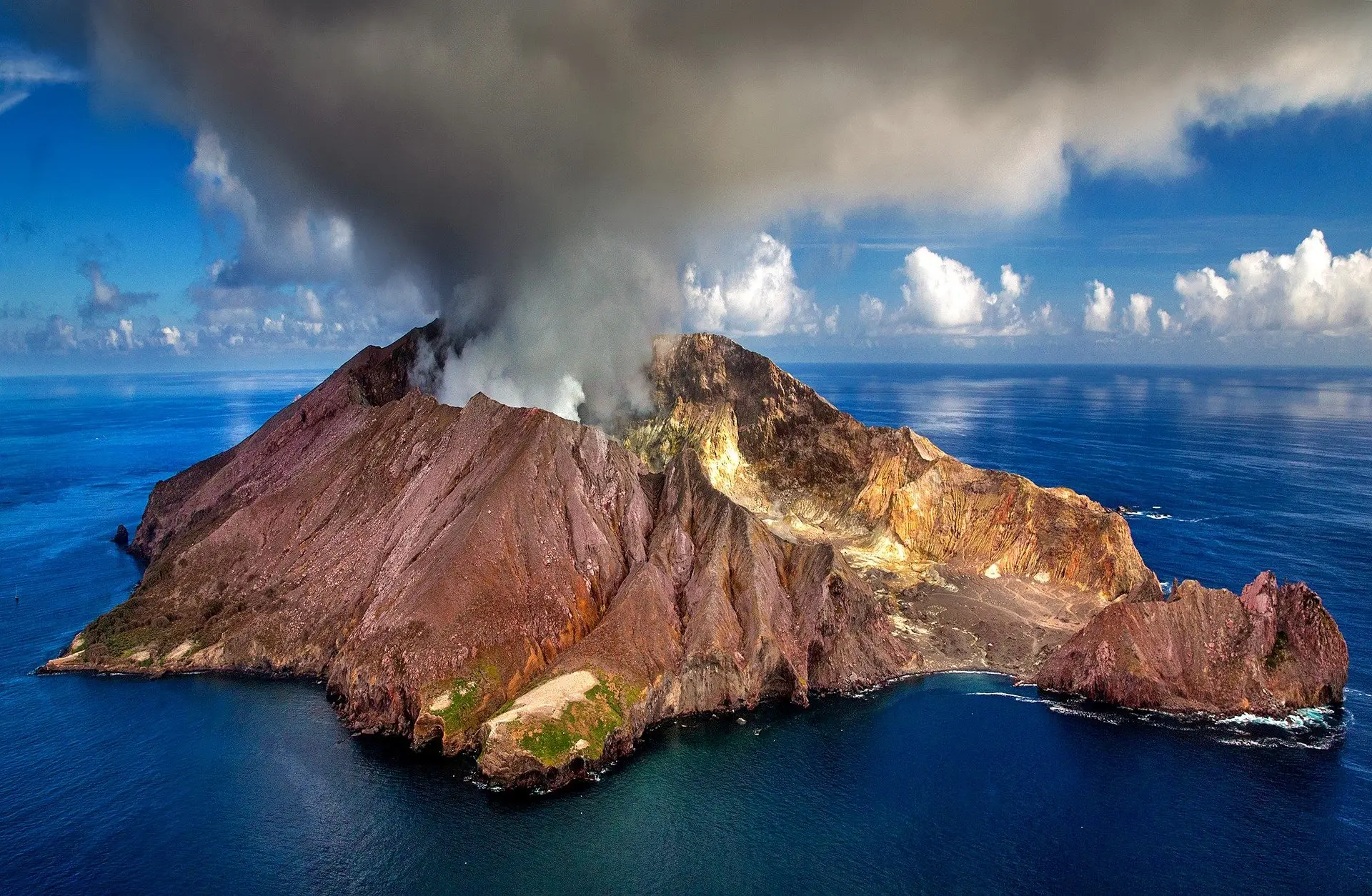
Understanding the importance of volcanoes starts with knowing exactly what they are. A volcano is a natural event that occurs when crust of a mass (planetary) object ruptures. In this case, Earth.
This phenomenon allows escape of gases, volcanic ash, and hot lava from a magma chamber below the surface of the earth.
The earth’s crust is broken into 7 major tectonic plates that float on a hotter, softer layer in its mantle. Volcanoes are mostly found where convergence and divergence of tectonic plates occurs.
Volcanoes pose numerous hazards once erupted. The ash of the volcano may glue itself to flying aircraft, disrupting the operations of the turbine. Historically, volcanoes have been associated with causing large-scale famines. An example of would be the violent eruption of Tambora Volcano in 1815 which killed around 100,000 people immediately after eruption.
Here we will look at some of the types of Volcanoes, a few facts and the importance of volcanoes in shaping our world Then we follow it by a detailed look at their advantages and disadvantages.
Types of Volcanoes
There are principally 4 Major kinds of Volcanoes
Cinder Cones
These are the simplest type of volcanoes, built from particles and blobs of lava ejected from a single vent (outlet). The gas-charged lava is blown violently into the atmosphere and breaks into small fragments that cool down in the air, solidify and fall as cinders around the vent; forming a circular or oval cone. The crater of these cinder cones is bow-shaped.
A volcanic crater is the dip formed in the ground after an eruption. This is usually where the vents are.
Composite Volcanoes
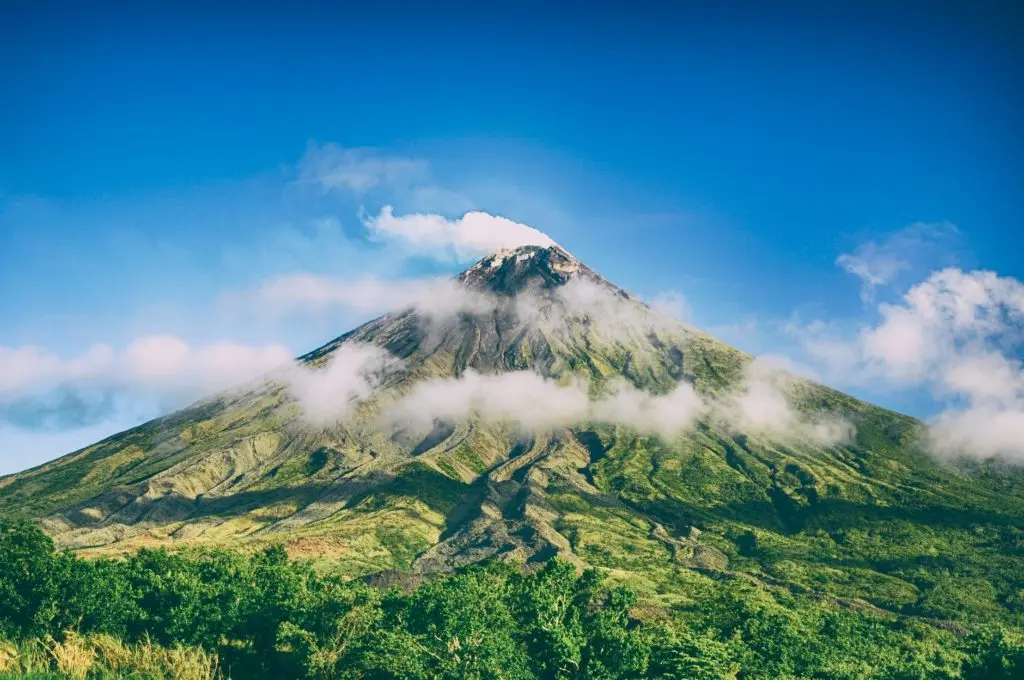
The grandest mountains of the earth are composite volcanoes. Composite volcanoes are sometimes also referred to as strato-volcanoes. Composite volcanoes are typically steep-sided, symmetrical cones of large dimensions.
They consist of alternative layers of lava flows, volcanic ash, cinders, blocks, and bombs rising up to 8000 feet above the base.
Lava Domes
They are relatively small, bulbous (fat and round) masses of lava with high viscosity preventing it from flowing greater distances. Hence, upon release, the lava piles over and around the vent. The dome largely grows by expansion from within.
This pushes the outer surface to expand, cool, harden and eventually shatter. This shattering causes spillage of loose fragments down the sides of the volcano.
Shield Volcanoes
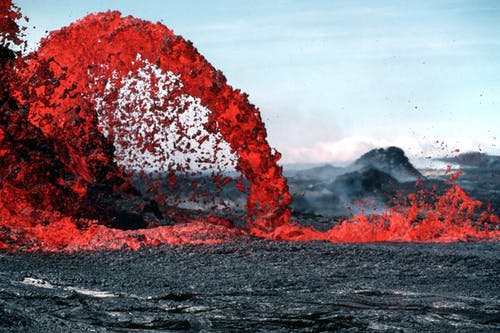
Shield volcanoes are built entirely from fluid lava flows. The flow after flow pours out in all directions from a main central summit vent or group of vents. They build up through collection of thousands of highly fluid lava flows called basaltic lave that helps it spread over great distances.
It then cools gently, forming sheets. Lava may also erupt from rift zones (fractures) that develop on flanks of the cone. Some of the largest volcanoes on our planets are shield cones.
Facts about Volcanoes
- Volcanoes are considered to be architects of the
Earth - Volcanoes have created more than 80% of our
planet’s surface, they have helped to lay the foundation that has allowed for
human existence. - The volcanic rocks are broken down by elements,
liberating nutrients that help in creating fertile soils on which cultivation
can occur - Volcanoes are found on every continent including
Antarctica - There are about 1,500 volcanoes that are still
said to be active - 10% of the currently active volcanoes are found in the United States
- The volcanic ash is very harmful and exposure to
it can lead to various respiratory diseases - The most common volcanic gases are water vapor,
carbon dioxide and sulfur dioxide - The most common cause of death from volcanic
eruption is suffocation - All volcanoes are unique. This is largely due to
their chemistry translates to molten lava activity.
Advantages of Volcanoes
Volcanoes are a great part of nature that can destroy anything and everything once it erupts. However, it still has its advantages and residential areas can be established away (more than 10km) from active volcanoes to avoid human threats.
Improve Land Fertility
Importance of volcanoes in helping to create fertile land for us is an established fact. The volcanic soil is highly fertile and productive for plants.
This is because the lava and ash of volcanoes are enriched with minerals. Once released, they are taken up by the soil helping in plant growth. Volcanic soil has greater water retention compared to normal soil and contains high level of phosphorous which is vital in plant growth.
Collectively these factors make the volcanic soil more fertile, requiring less fertilizer and producing a higher yield.
Living near volcanoes safer than thought to be
Volcanoes are not always a threat to the people, if they’re living in the ‘low risk zone’ about 10km from it. Countries such as Japan, Italy, Philippines, and Indonesia have people living in close proximity to volcanoes. However, they use this to their advantage as the soil there is enriched with nutrients and minerals.
A glaring example of a town in ‘low risk zone’ from a volcano would be the city of Seattle.
Refuge for Plants and Animals
Volcanoes can provide a refuge for plants and animals due to their steep inclination. This helps in plants to find refuge in areas where humans have developed land nearby volcanoes. It is now thought that volcanoes may have provided refuge for plants and animals after the Ice Age as well.
New layers of land
The lava from volcanoes is constantly a source of providing and adding new land. Currently, active volcanoes around the world include Mount Unzen in Japan, Etna Volcano in Italy, Maunaloa and Kilauea in Hawaii.
Carbon Cycle Regulation
Before humans started burning massive amounts of fossil fuels and were exceeding the planet’s carbon limits, volcanoes played a pivotal role in contributing carbon dioxide to the atmosphere. Carbon dioxide is one of the major reactants required by plants to carry out photosynthesis.
Volcanoes can be a source of providing carbon balance to our planet. They may also help in keeping our planet warm and preventing it from freezing.
Provide Water to the Atmosphere
Volcanoes help in providing the planet with water, one of the major resources that are required by our planet which is rapidly deteriorating.Importance of volcanoes In fact, about 75-95% of gases emitted upon eruption of a volcano are water vapor.
Provides Sulfur
Volcanoes contribute a large amount of sulfur dioxide levels to the earth. Sulfur is the third most abundant mineral in the human body. It helps to build proteins in humans as well as various other organisms.
Sulfur dioxide emitted from the volcanoes are preventing global temperatures from rising too high, slowing down 25% global warming potential of greenhouse gases from 2000-2010.
Geothermal Power
They provide a clean, renewable energy source by harnessing the heat from the Earth’s interior. According to United States Geological Survey the volcanoes of California produce geothermal energy for the State . The Geysers field in the southwest of Clear Lake Volcanic Fields is one of the world’s major producers of electricity from geothermal energy.
Valuable Minerals
Volcanoes are the primary source of gold, silver, copper, lead zinc and even diamonds thrown up from the mantle.
Disadvantages of Volcanoes
Large-scale destruction
Volcanoes are associated with wide-scale destruction if large volcanic eruptions take place. The lava from these eruptions may flow into the city causing massive infrastructure damage and deaths. Many people have even suffered deaths due to volcanic blasts. This may lead to people being homeless, requiring aid and assistance for their survival. Volcanic eruptions can bury farmland in ash, destroying crops and causing local famines.
Fear of Eruption
People may choose not to live near volcanoes as there is a constant fear of volcanoes erupting anytime. Therefore the area around the volcano may be devoid of humans, even if it is highly fertile and people want to develop it.
Harmful Gases
Volcanoes produce various gases. These gases are quite harmful if inhaled by humans, leading to various respiratory diseases of the lungs such as asthma. These gases, even at low levels, may cause irritation to the eyes, nose, and throat and at higher levels can cause tachypnea, dizziness, swelling, headache as well as suffocation.
Volcanic ash is also associated with various respiratory conditions such as asthma, COPD and emphysema. Silica, a part of the volcanic ash, causes silicosis if there is prolonged exposure.
Carbon Dioxide – Global Warming
Although volcanoes act as carbon cycle regulators, the carbon dioxide gas is a major cause of the greenhouse effect which aggravates global warming. This has led to various changes in the weather patterns around the region of volcanoes.
Wildlife has been affected as well. Volcanoes have caused habitat loss of various animals, causing them to look for new habitats in order to survive. However, some may become fragmented due to difficulty in finding new habitats and eventually get endangered. Just like humans, animals also fall victim to volcanic lava and blasts directly, leading to their death.
Importance of Volcanoes
It’s true that usual perception of people about volcanoes
revolves around it being a natural disaster. But that’s like saying ‘sugar
causes diabetes’ without ever looking at its benefits. Just like sugar is an
important part of our diet, Volcanoes also positively contribute to the health
of our planet and very significant.
Importance of Volcanoes in Soil Nutrition
The ashes of the volcanoes are natural fertilizers for our plants and soil as they contain various beneficial minerals. They create air spaces inside the soil, helping to insulate plants and reduce extreme temperature changes.
Importance of Volcanoes as a Natural Habitat
Even though the slopes of the volcanoes are considered to be inaccessible and dangerous due to them being steep, they still allow for fruitful plant growth and habitation for animals in locations uninterrupted by human intervention.
Importance of Volcanoes in production of sustainable energy
Volcanoes are a source of geothermal energy which is one of the renewable energy resources becoming increasingly popular nowadays. This is due to the internal heat generated by volcanoes can be utilized to produce electricity. The environment of volcanoes having a hydrothermal component allows them to be a valuable source of geothermal energy.
However, much of the thermal energy associated with volcanoes radiates from magma which cannot be exploited as of now unfortunately. This is due to the fact that it would involve drilling and various other processes to provide a minimal amount of energy in return.
Early volcanic emissions have contributed to formation of the aerobic atmosphere by release of carbon dioxide and water vapor. The water vapor then comes back to ground in the form of rain, and is believed to be a major source of water for the formation of our oceans.
Additionally, volcanoes help to keep the planet’s temperature warm enough so that life can be suitable without extracting heat from its interior.
What is a safe distance from Volcanoes?
A safe distance from active volcanoes is 5km and greater. Beyond 5kms, the major threats are volcanic ash and harmful gases. Breathing in just a few particles once or twice will cause irritation or trigger allergies but will not be very harmful.